
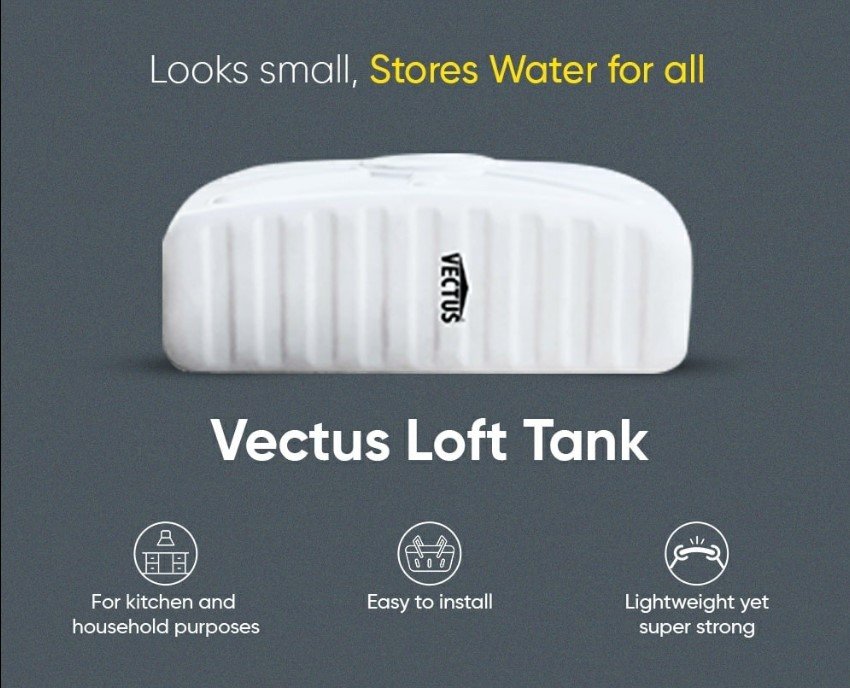
Space can be difficult to manage in compact homes, especially when you need a reliable way to store water. A large storage tank may not always be practical when the terrace or utility area is already occupied. This is where a loft installation can offer a useful alternative.
Loft water tanks are designed to fit into elevated and compact spaces where conventional storage options may not be suitable. Their purpose is not simply to store water but to make better use of the space already available inside a property.
Why Loft Storage Makes Sense
In a smaller home, every part of the available space matters. Areas above bathrooms, utility sections, or other suitable locations may otherwise remain unused.
Using such spaces for water storage can free up floor and terrace areas for other purposes. It can also provide a more organised setup without requiring a large visible tank in an open area.
However, the available space should always be assessed before choosing a tank. Height, width, access, and structural support all need to be considered.
Designed for Compact Areas
One of the main advantages of loft water tanks is their suitability for locations where space is restricted. Their dimensions can make them easier to accommodate in areas with limited height or floor space.
This makes them particularly useful for apartments, compact houses, and bathrooms where conventional tank placement may not be convenient.
Instead of trying to fit a large tank into an unsuitable location, a compact design allows the available area to be used more efficiently.
Capacity Still Matters
Saving space does not mean compromising on water requirements. The capacity should be selected according to how much water your household actually needs.
Start by considering the number of people living in the home and their daily water consumption. Think about activities such as bathing, washing, cooking, and cleaning.
If the water supply in your area is irregular, you may also need additional storage. At the same time, choosing a tank that is much larger than necessary can defeat the purpose of space-saving installation.
The goal is to find a balance between adequate storage and the dimensions of the installation area.
Measure Before You Buy
A common mistake is selecting the tank first and checking the space later. For a loft installation, measurements should come before the purchase.
Measure the length, width, and available height of the intended location. Also consider the path through which the tank will need to be carried during installation.
Leave enough room for accessing the tank when it needs to be inspected or cleaned. A tank may physically fit into a space but still be difficult to maintain if there is no convenient access around it.
Think About the Tank’s Shape
Capacity is not the only dimension that matters. The shape of the tank can determine how easily it fits into a particular space.
Some spaces may have more width but limited height, while others may have a narrow footprint. A tank designed for compact installation can make better use of these unusual dimensions.
This is why plastic water storage tanks are available in different shapes and capacities. Having more design options can make it easier to match storage requirements with the available area.
Lightweight Construction Can Help
When a tank is being installed in an elevated or compact location, handling and transportation become important practical considerations.
Plastic construction can offer the advantage of being relatively lightweight, which may make the product easier to transport and position during installation.
However, the supporting structure must still be suitable for the filled tank. Water adds significant weight, so the installation area should be assessed properly before the tank is placed.
Look for Practical Features
A space-saving tank should not sacrifice everyday convenience. Features such as a properly fitted lid, suitable inlet and outlet arrangements, and easy access for cleaning can make a difference.
The lid should help keep unwanted dust and particles from entering the stored water. Access to the tank should also be practical enough for periodic inspection.
When comparing plastic water storage tanks, look at these functional details instead of focusing only on dimensions or appearance.
Consider Material and Construction
Material quality is important for any water storage product. The tank should be made from suitable material and designed to handle regular use.
For indoor or loft installations, you may not need the same level of outdoor exposure protection as a rooftop tank, but durability remains important.
Check the manufacturer’s specifications for information about the material, construction, intended application, and maintenance requirements.
Where Can Loft Tanks Be Used?
Loft tanks can be considered for several residential settings where conventional storage space is limited. They may be useful above bathrooms, in utility areas, or in other suitably designed indoor spaces.
They can also be considered when homeowners want to keep the terrace or other open areas free for different uses.
The suitability of the location depends on the available space, structural support, water connections, and accessibility for maintenance.
Final Thoughts
Space-saving storage is particularly valuable in compact homes, and loft water tanks can provide a practical way to use otherwise unused elevated areas.
When choosing one, focus on capacity, dimensions, shape, material, installation requirements, and maintenance access. The right product should fit the available space without making everyday cleaning or inspection difficult.
For homeowners considering plastic water storage tanks, a loft installation can be a useful option when the product dimensions and storage capacity match the requirements of the property.
A well-planned installation can turn an unused space into a functional storage area while keeping the rest of the home more organised.